
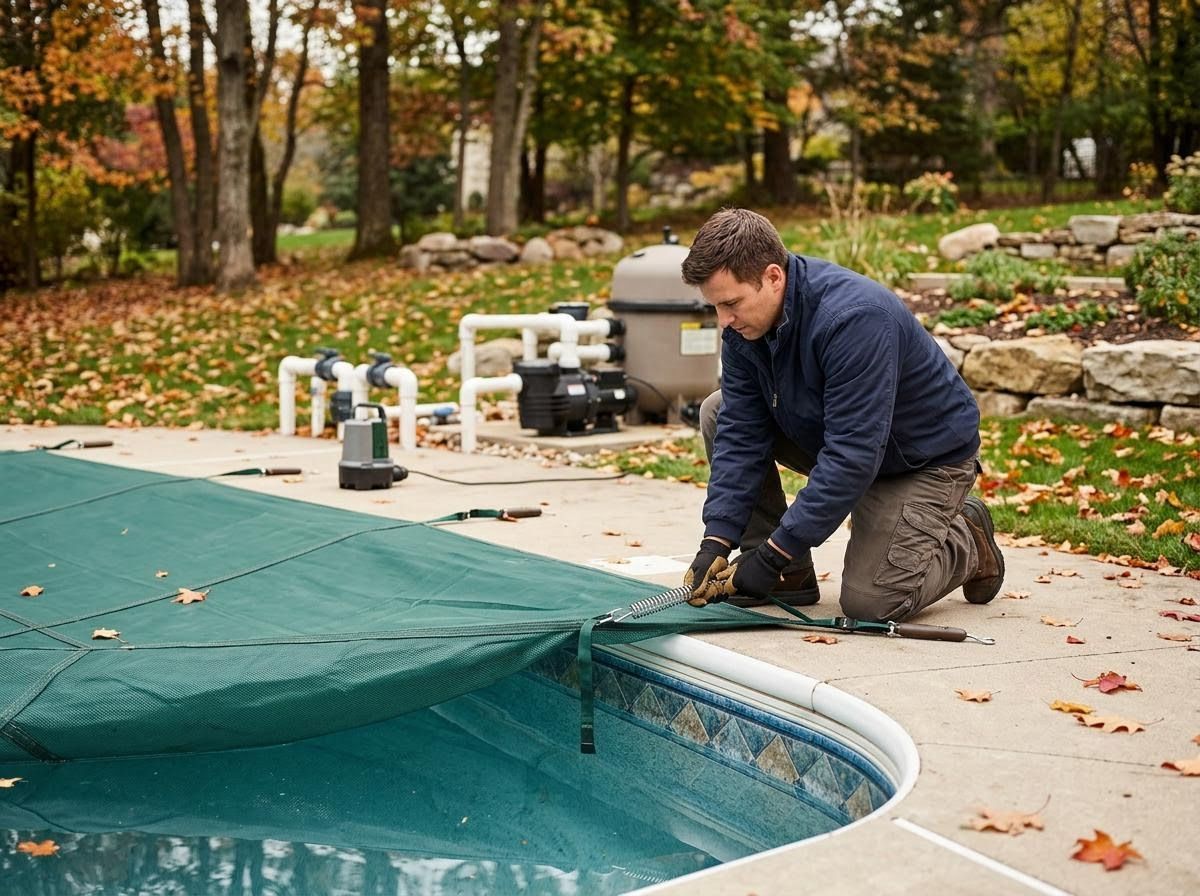
Every year around late October, my phone starts lighting up with the same question: "Chris, do I need to close my pool for the winter, and when should I do it?" It's a great question, because Oklahoma winters aren't like winters up north. We can have a 70-degree afternoon in December and an ice storm the next week. So the answer for a backyard in Edmond or Oklahoma City is a little different than what you'll read on a national website.
Here's how I think about it, in plain terms.
Why Oklahoma Winters Are Tricky
Our winters are mostly mild, but they're unpredictable. We get long stretches where the water barely needs attention, and then a hard freeze rolls down the plains with very little warning. Those quick freezes are what cause problems. Water that sits still in pipes, pumps, filters, or heaters can freeze, expand, and crack things.
That's really the whole goal of winter pool care here: keep the water clean and keep it from freezing where it can do damage.
Option 1: Keep It Open (With a Plan)
A lot of Oklahoma pool owners keep their pools open year-round, and that can work well. Here's what that usually looks like:
Keep the pump running during freezes. Moving water is much less likely to freeze. Many automation systems have a freeze protection setting that turns the pump on when temperatures drop. If you have one, make sure it's turned on and working before the first cold snap.
Keep up with the chemistry. The water needs less attention in cold weather, but it still needs some. Check it regularly so you don't open up to a green pool in spring.
Keep debris out. Fall in Edmond and OKC means leaves, and lots of them. Skim often and empty baskets so the system can keep circulating.
Watch for power outages. If an ice storm knocks your power out during a hard freeze, your pump stops. That's when it pays to have a plan, and to give us a call if you're not sure what to do.
The upside of staying open is that your pool looks good all winter, and if you have a heater or an attached spa, you can still use it on those nice winter days. There's nothing like a hot spa on a cold, clear Oklahoma night.
Option 2: Close It for the Season
Some folks would rather not think about the pool until spring, and that's fine too. A proper closing usually includes:
Balancing and cleaning the water before the cover goes on.
Lowering the water level as needed for your pool and cover type.
Blowing out and plugging the lines so there's no water sitting in the plumbing.
Draining the pump, filter, and heater so nothing freezes inside the equipment.
Putting on a good winter cover to keep out leaves and debris.
Done right, a closed pool rides out the winter without much worry. Done wrong, it can mean cracked equipment or a big mess in the spring. If you've never closed a pool before, it's worth having someone walk you through it or handle it for you.
When Should You Close It?
In central Oklahoma, a good rule of thumb is to wait until the water stays cool, usually somewhere in late fall, once daytime temperatures have settled down. If you close too early while the water is still warm, algae has an easier time getting started under the cover. Most of the trees have also dropped their leaves by then, which makes the closing cleaner.
Keep an eye on the forecast, though. If a hard freeze is coming and you haven't decided yet, at least make sure your pump is running so water keeps moving.
A Word for Concrete (Plaster) Pools
If you have a concrete pool with a plaster finish, keep your water chemistry in good shape all winter long, whether the pool is open or closed. Good water is the best thing you can do to keep that plaster looking good for years to come.
A Quick Word on Fiberglass Pools
If you have a fiberglass pool, you're in good shape for our climate. The smooth surface makes it harder for algae to take hold, which helps whether you keep the pool open or closed. Your equipment still needs freeze protection, though. The shell isn't usually the worry in winter; the plumbing and equipment are.
Let's Talk About Your Pool
If you have questions about getting your pool ready for winter, or you'd just like a second set of eyes on your setup before the first freeze, I'm happy to help. Give Trophy Pools & Design a call or send us a message. We serve Edmond, Oklahoma City, and the surrounding area, and I'll give you a straight answer, no pressure.
Chris Birdsong, Owner, Trophy Pools & Design LLC
Common Winterization Mistakes to Avoid
Even with good intentions, some common errors can undermine your winterization efforts. A frequent mistake is not balancing the water chemistry thoroughly before closing, which can lead to staining or corrosive damage to your pool's surfaces and equipment. Another critical oversight is incomplete draining of pipes and equipment; any trapped water can freeze and rupture components. Using an ill-fitting or damaged pool cover also poses a risk, as it won't effectively protect your pool from debris and sunlight, potentially leading to a green mess in the spring. Lastly, waiting until the last minute when temperatures are already consistently below freezing can make the process more difficult and increases the risk of damage during unexpected cold snaps.
Proper pool winterization is a preventative measure that safeguards your investment and sets the stage for a seamless spring opening. By understanding and implementing these key steps, you protect your pool from harsh winter conditions and avoid expensive repairs. For personalized advice on your specific pool or to explore professional winterization services that ensure every detail is meticulously handled, we invite you to learn more about how Trophy Pools can support your pool care needs throughout the year.